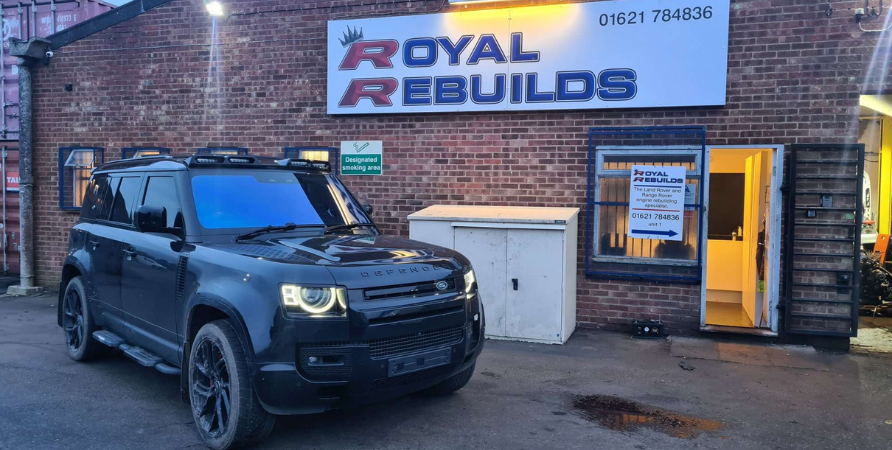
Own a Land Rover Defender long enough, and you will understand that the engine makes or breaks the entire driving experience. Whatever you are trying to do with your Defender, hauling a 3.5 ton trailer up a steep incline, crawling through muddy tracks or travelling on the tarmac without rattling your spine, the Defender performs according to what is under its bonnet. Some Land Rover Defender engines, like the legendary 300Tdi, will happily take you across continents with nothing more than basic tools and a bit of diesel, while others, such as DT448, let you experience the modern drivability and tons of torque but are a little temperamental when put under strain. Newer Ingenium-powered Defenders are more refined and comfortable, but they fall behind in reliability when compared with the old-school workhorses of past Defenders.
For those who own and drive a Defender, priorities are different. Torque when it is required, reliability when in the middle of nowhere, and an engine that will keep going when temperatures turn extreme, the load increases, or terrain becomes difficult. This guide breaks down which defender truly performs best for towing, off roading and daily driving. Our guide is based on real world use and has opinions of our master technicians, not on the marketing claims.
Land Rover Defender has been around in some shape or form since 1940, so it has been fitted with several engine families over the decades, each with its own reputation, quirks, and fan base. Below is the detail of the main engine generations.
It is a well known fact that if you look after a TDI engine well, it can outlive the chassis it’s bolted to. These engines are simple, mechanical, and famously fixable with basic tools. They’re not fast, but they produce predictable torque and exceptional low-end pull. Perfect for off-road touring and utility work. When reliability matters more than refinement, the TDI family is king.
TD5 was known to hit the sweet spot. It brought electronic management, extra power, smoother delivery of that power, and potential for better tuning. This engine was a jack of all trades as it was suitable for towing, long distance trips and off road adventures. However, enthusiasts loved this engine for its monstrous torque at low revs that kept the Defender going.
Land Rover’s move towards Ford was a step taken in the right direction, as it brought refinement to their engine lineup. The newer engines offered better fuel economy, faster throttle response and quieter operation. However, those engines were noticeably more sensitive to load, and the clutch and drivetrain showed weakness if not upgraded properly.
Ingenium engines were part of the new Defender concept and brought a completely different driving experience. Ingenium diesel and petrol engines deliver everyday comfort, smooth acceleration, and impressive towing capacity. Meanwhile, the supercharged V8 models cater to drivers who want performance above all else. These engines are powerful and refined, but naturally, they lack the bush-mechanic simplicity that made older Defenders iconic.
Defender is not just capable of towing, it is exceptional at doing it. It’s not the horsepower that has the pulling power, it’s the torque it produces, the cooling power and how confidently the engine holds power under sustained load. The following are the three Defender engines that show their true colours when the trailer hitch is loaded, and the gradient rises sharply.
The star of the show is without doubt the TD5, which earns praise from people who tow regularly. Its torque curve is broad and predictable, allowing it to pull heavy trailers without constant gear changes. The engine feels composed on inclines, and with a healthy cooling system, it handles long-distance towing with ease. Many owners call it the “no-drama” towing engine. Strong, flexible, and dependable.
The 300Tdi might not win any speed contests, but when towing, slow and steady often wins the safety game. It’s incredibly robust and resists heat build-up better than expected. The simple turbo-diesel design delivers torque exactly where you need it, making the 300Tdi a great choice for farm work, long-haul towing, and utility-based Defenders. If you value reliability over refinement, the 300Tdi will not let you down.
The newer and more refined 2.2 TDCi is equipped with modern technology, making it a breeze to tow heavy loads. It’s quieter, smoother and offers a better driving experience. However, when towing at maximum capacity for long periods, some owners report heat and clutch sensitivity. This issue can be resolved by upgrading the clutch and drivetrain.
Off roading is where going gets tough with steep climbs, crawling speeds, dodgy fuel, water crossings, relentless heat, and dust capable of infiltrating every seal. The best off-road engine isn’t the most powerful one; it’s the one that keeps torque steady, stays cool, and won’t leave you stranded miles from civilization. Here’s how the main Defender engines perform when the terrain turns hostile.
You can ask for advice from an overlander travelling in the remote parts, and you will probably hear the same advice. “Take a TDI”, those incredible machines have earned the reputation of the gold standard for off roading for being fully mechanical rather than fancy electrical engineering. They can tolerate poor quality diesel and can run cool under low speed crawling. You can repair them with basic tools and those engines are super dependable in harsh environments.
If your requirement is muscular torque delivery and tunability, TD5 is all you need. You can trust this engine with your life at low range, offering smooth, controlled traction without the need for aggressive throttle modulation. Its electronic complexity might concern some, but its brilliant waterproofing and a healthy injector harness keep this engine ready for any challenge.
Nothing beats a good old V8 when it comes to instant power during rock crawling, sand driving and steep climbing. Both older V8 and the new supercharged V8s serve the purpose but are thirsty and maintenance-heavy. But, a real petrol head knows the liberation they get with those incredible machines, you simply push the throttle, and they simply go.
For beginners, the TDCi engines are easy when dealing with off road terrain. Torque delivery is smooth and predictable, which helps with technical manoeuvres. Routine maintenance can help it go for years. However, for deep water crossings or remote overlanding, the electronics and tighter tolerances make them less forgiving than the TD5 or TDI engines.
Land Rover Defender is a battle tested machine and as rugged as it comes, but daily driving exposes it to a very different kind of challenge. Stop start traffic, urban speeds, short trips, and the requirement for smoother acceleration. Not all engines deliver the comfort and ease that modern commuting demands, so let us help you with that.
If you want to drive a Defender that looks classic and is quieter ad civilized than the 2.2 TDCi is the standout choice. This engine is more fuel efficient and refined than its counterparts, and its smoother throttle response makes it the easiest Defender engine to live with on the road. You can use it for daily commuting, such as running to the local shops or the school runs with absolute ease.
For those trying to find a balance between power, personality, and modern usability. It’s responsive, offers plenty of torque for overtaking, can be tuned with ease, and on top of it all, and still feels like a proper Defender engine. The TD5 excels in mixed driving, towing, long distance trips, and off road adventures. The star quality remains that muscular pull from low revs that Defender drivers crave.
The Land Rover as a whole and the Defender, particularly benefited when they moved to the Ford derived TDCi engines. Newer engines offered a better fuel economy, faster throttle response, and a quieter, more refined operation, making the Defender ideal for the daily drive. You just need to upgrade its clutch and drivetrain properly.
In this case, it’s the newer, the better. Ingenium diesel and petrol engines deliver everyday comfort, smooth acceleration, and impressive towing capacity. Meanwhile, the supercharged V8 models cater to drivers who want performance above all else. These engines are powerful and refined, but naturally, they lack the bush-mechanic simplicity that made older Defenders iconic.
No matter if you are upgrading, restoring or planning a full swap, you must understand how different Defender engines behave in the real world. Choosing the wrong engine can lead to mismatched performance, unexpected running costs, and reliability issues. Here are the key factors every Defender owner should weigh up first.
If you are looking for the torque curve and real world drivability, you should go for a TD5 or TDI engine that offers torque and low end to get you out of sticky situations. You must consider compatibility with your model and drivetrain, as it must match the engine mounts, ECUs, gearboxes, wiring looms and cooling systems. It requires careful consideration and planning to avoid electrical gremlins and performance issues. You should ascertain what sort of usage you will have for your vehicle. If it is towing and touring, you should go for TD5 or 300TDI. For off road expeditions, choose 200TDI or 300TDI. Daily driving is best with 2.2/2.4 TDCi, and performance and fun warrant a V8 under the bonnet. You must consider fuel economy, parts availability and long term support along with your realistic budget expectation.
A Land Rover Defender is more than a vehicle — it’s a tool, a workhorse, an expedition partner, and for many owners, a lifelong project. The engine you choose defines how well it performs in each of those roles. Whether you prioritize towing strength, off-road dependability, or everyday drivability, every Defender engine comes with its own strengths, quirks, and personality.
For owners restoring older Defenders or considering an upgrade, getting proper guidance matters. Understanding torque curves, compatibility, cooling needs, and rebuild quality can make the difference between an engine that lasts decades and one that becomes an expensive headache. That’s why many Defender enthusiasts turn to experienced specialists who work with these engines every day and know their real-world behaviour better than anyone else.
The best engine depends on usage: 300Tdi for simplicity and reliability, TD5 for all round performance, and 2.2 TDCi for comfortable daily driving.
Most enthusiasts consider the 300Tdi the most reliable due to its mechanical design, simple electronics, and long service life.
Yes. The TD5 is one of the strongest towing engines thanks to its broad torque band and stable performance under load.
Yes. The 2.2 and 2.4 TDCi engines are the smoothest and quietest options, making them ideal for commuting and mixed driving.
For rugged off-roading and remote expeditions, the 200Tdi and 300Tdi excel due to their durability, cooling stability, and mechanical simplicity.
Yes, but engine swaps require compatibility checks for mounts, ECU, wiring, cooling, and drivetrain components. Proper installation is essential to avoid reliability issues.
The 300Tdi is generally the most fuel-efficient, especially in long-distance and off-road scenarios where low-rev torque is key.
Yes. Regular oil changes, cooling system checks, and injector inspections significantly extend engine lifespan, especially on TD5 and TDCi models.
With proper servicing, most Defender engines — particularly the Tdi and TD5 — can exceed 250,000+ miles without major internal failures.
Reconditioned and upgraded Defender engines are available through specialist engine rebuilders in the UK who work specifically with Tdi, TD5, and TDCi units.