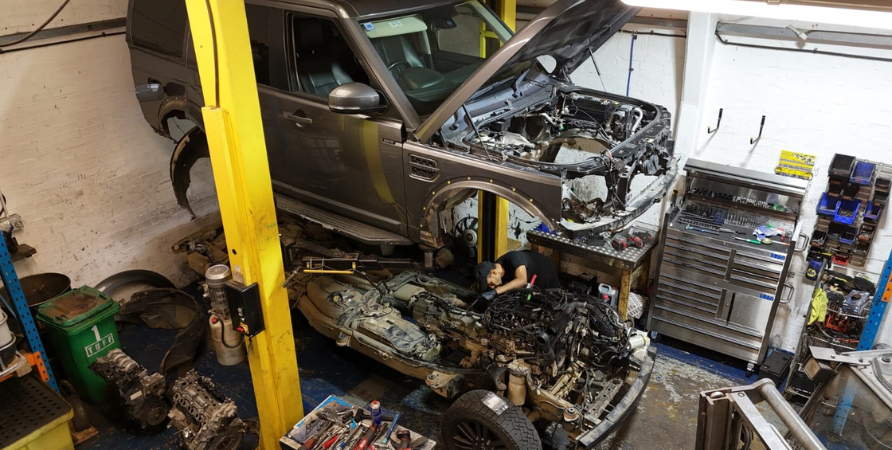
The Discovery 4 is a capable family and towing vehicle, but its diesel engines can develop costly faults. UK models from 2009 to 2016 include the early 2.7 TDV6 and the more common 3.0 TDV6 and SDV6. Knocking, low oil pressure, poor acceleration and coolant loss can point to different faults. Some need minor repairs; crankshaft damage can stop the engine. Owners searching for a Land Rover Discovery 4 Engine for Sale should first find out exactly what failed. Replacing the engine without checking lubrication, cooling and turbo components may leave the cause unresolved.
A Land Rover Discovery 4 Engine Replacement becomes necessary when major internal damage makes a rebuild unsafe or uneconomical. A failed crankshaft, connecting rod or block can make repairs costly. However, a warning light or reduced power does not automatically mean the engine has failed. Fault code reading, an oil pressure test and a physical inspection can separate a serious mechanical fault from an EGR, boost or sensor problem. This guide covers failure points, warning signs, diagnostic checks, UK prices and ways to prevent repeat damage.
Before looking at individual faults, use this simple rule to protect your vehicle from terminal internal damage:
| Severity Level | Warning Signs You Notice | Immediate Action Required |
| Critical (Stop Now) | Heavy metallic knocking, red oil pressure warning light, rising temperature gauge, or thick blue smoke | Pull over safely, switch off the engine, and arrange recovery. |
| Moderate (Book Soon) | Brief cold-start rattle, whistling under boost, black exhaust smoke, or intermittent limp mode | Reduce speed, avoid heavy acceleration, and book a specialist diagnostic scan. |
Recognising these seven Land Rover Discovery 4 Engine Problems early and applying the right fix gives you the best chance of saving the original engine unit.
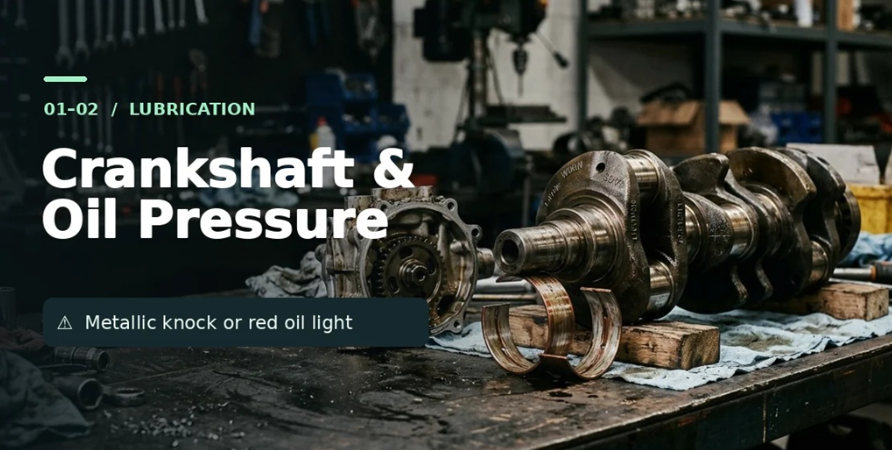
Crankshaft failure is the most serious mechanical fault on the 2.7 TDV6 and 3.0 SDV6 engines. The crankshaft relies on a thin film of pressurised oil to spin cleanly inside its main and big-end bearings. Oil dilution from interrupted DPF regenerations, blocked oil pickup pipes, or extended service intervals starves these bearings of lubrication. Once a bearing spins, friction scores the crankshaft journals and can snap the shaft completely.
The oil pump pushes lubricant through narrow galleries to the crankshaft, camshafts, and twin turbochargers. On many Discovery 4 diesel engines, repeated heat cycles and engine vibration weaken the oil pump casing, or the belt tensioner mounting boss cracks. A sudden drop in oil pressure starves moving metal surfaces within seconds.
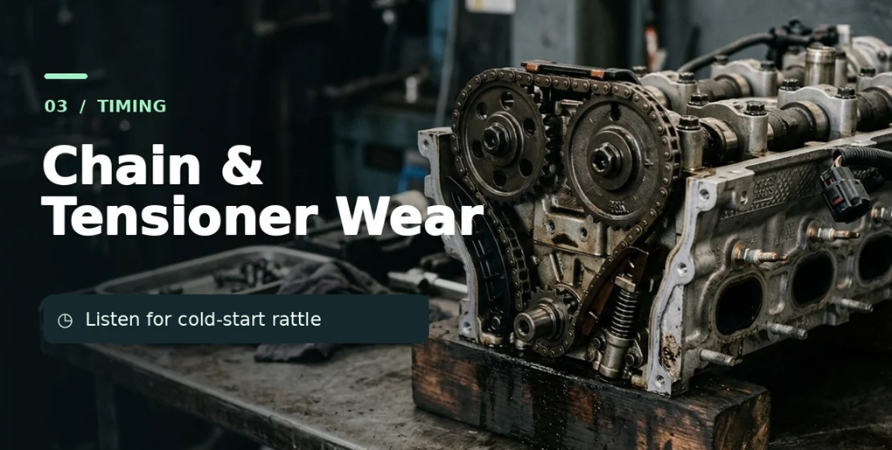
While the Land Rover engines use a front timing belt, especially in the Discovery 4 model to drive the fuel pump and camshafts, a secondary timing chain at the rear of the cylinder heads links the inlet and exhaust camshafts. Poor oil quality and carbon sludge wear down the plastic chain guides and hydraulic tensioners. If the chain stretches too far, valve timing drifts or the chain jumps a tooth, causing the pistons to strike the valves.
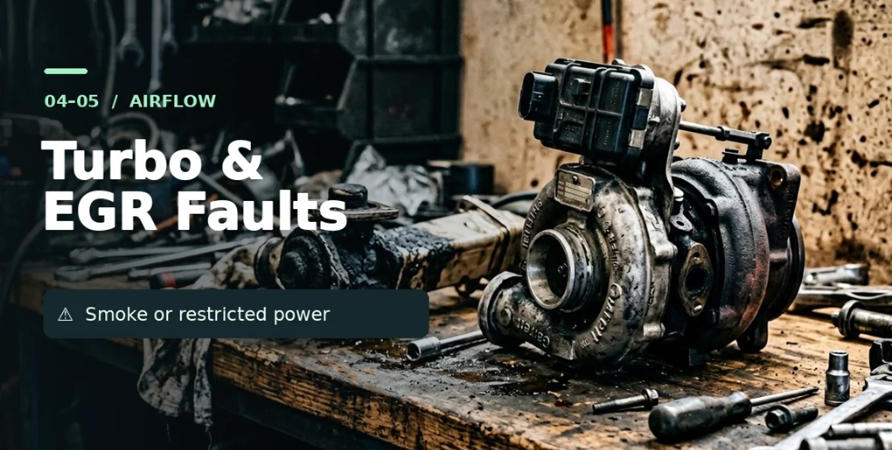
The 3.0 SDV6 uses a sequential twin-turbocharger setup that operates under extreme exhaust heat and rotational speed. Carbon buildup in the oil feed lines restricts lubrication to the turbo bearings, while electronic boost actuators can stick due to soot and heat exposure.
The Exhaust Gas Recirculation (EGR) system lowers combustion temperatures by feeding measured exhaust gas back into the intake manifold. Over thousands of miles of short UK journeys, sticky soot clogs the EGR valves and cracks the internal cooling cores. Blocked valves choke airflow, while cracked coolers allow coolant to enter the intake system.
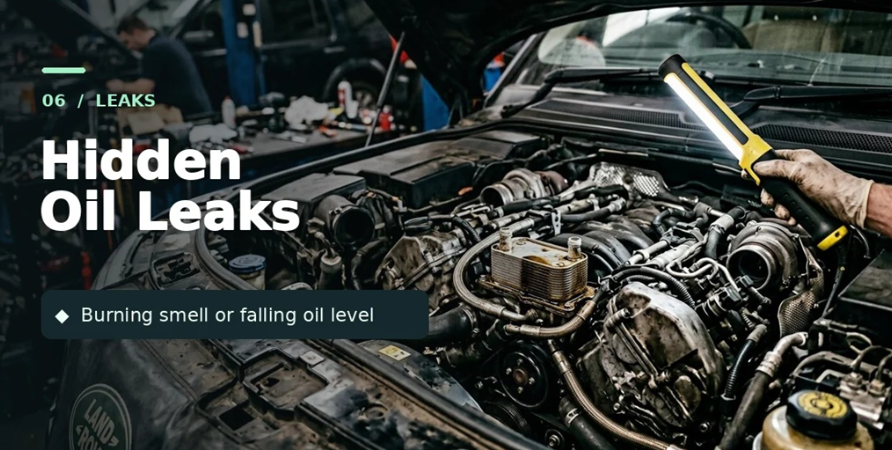
The Discovery 4 V6 engine places its oil cooler inside the central “vee” between the two cylinder banks. Heat degrades the rubber seals over time, allowing engine oil to pool in the valley beneath the intake manifolds. Because thick plastic acoustic covers sit over the engine, small leaks often go unnoticed until oil levels drop dangerously low.
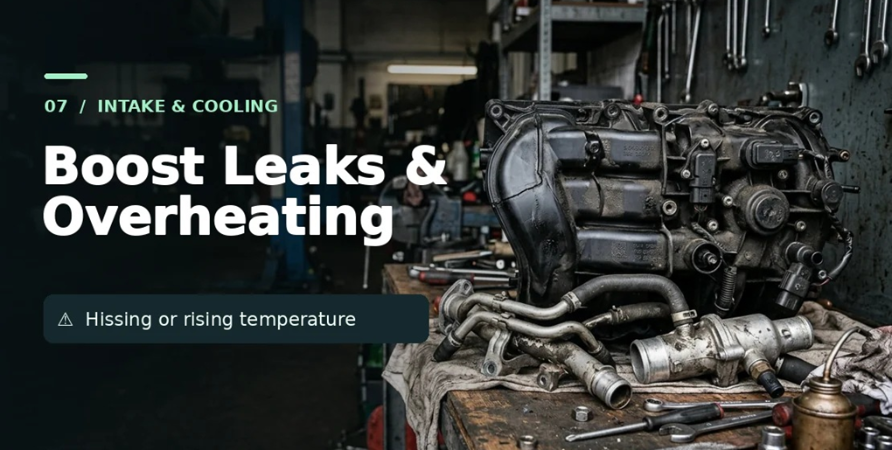
Plastic inlet manifolds on the 3.0 diesel engines frequently split along their seam under high boost pressure, causing air leaks and uneven fuel burning. Alongside boost leaks, failing thermostat housings, split coolant pipes, or head gasket breaches cause rapid overheating. Because the Discovery 4 is a heavy 4×4, running the engine hot warps the aluminium cylinder heads quickly.
Independent UK specialists recommend changing the oil and filter every 6,000 to 8,000 miles using fully synthetic 5W-30 oil meeting the STJLR.03.5005 specification. Checking the exact Land Rover Discovery 4 Engine Oil Capacity before servicing prevents overfilling or underfilling:
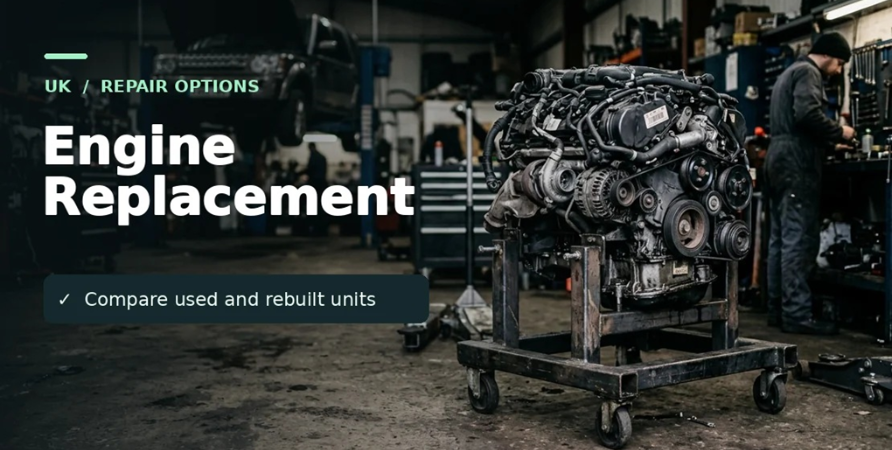
When internal damage goes beyond minor parts, owners must compare the Land Rover Discovery 4 Engine Replacement Cost against the value of the vehicle. Pricing across independent UK Land Rover garages depends on whether you choose a donor unit, a rebuilt block, or full Land Rover Discovery 4 Engine Supply and Fit packages.
| Service / Repair Type | Estimated UK Cost (2026) | Typical Turnaround Time |
| EGR Valve or Oil Cooler Seal Repair | £400 – £1,100 | 1 – 2 working days |
| Turbocharger Replacement (Single/Twin) | £1,200 – £2,500 | 2 – 3 working days |
| Used Donor Engine (Supply & Fit) | £2,200 – £4,200 | 5 – 6 working days |
| Reconditioned Engine (Supply & Fit) | £3,500 – £6,500 | 6 – 8 working days |
A few simple habits prevent most failures:
The earliest signs are a deep knocking noise that worsens under load, a flickering oil pressure light, and metal flecks in the oil.
About 5.9 litres with the filter. The 2.7 takes about 5.5 litres. Use 5W-30 meeting the maker’s low-SAPS specification.
Every 7 years or 112,000 miles on the 3.0, and 7 years or 105,000 miles on the 2.7, whichever comes first. Both belts must be done together.
Around £3,500 to £6,500 supplied and fitted for a reconditioned unit, depending on engine code. New factory engines cost £7,000 to £12,000+.
Sometimes. If the block is sound, a specialist rebuild costs roughly £5,000 to £8,000, but a snapped crankshaft often makes replacement the better option.
It can be, with regular, correct-spec oil changes and on-time timing belt service. Neglected servicing is what turns its weak points into failures.
It usually points to bottom-end bearing wear or oil starvation. Stop driving and have the oil pressure tested immediately.
Common triggers are turbo, EGR, boost or DPF faults. A Land Rover-capable diagnostic scan will identify the cause.
Yes. Short cold trips block the DPF and dilute the oil with diesel from failed regenerations. A regular longer run at motorway speed helps.
Only with a full service history, evidence of timing belt replacement, no knock on cold start, and clean oil with no metal particles.